
OUR BUSINESS
Our Growth Strategy
Bangladesh is our core market and we expect it to continue to be a growth market for us in the foreseeable future. The country has a population of about 174.8 million and is one of Asia’s most vibrant economies. Nominal GDP crossed the USD 500 billion mark in FY2025-26, reaching USD 501 billion on provisional national accounts, close to double the level of a decade earlier in US dollar terms. GDP per capita reached USD 2,866 and gross national income per capita passed USD 3,000 for the first time, placing Bangladesh among the higher income levels in South Asia. Merchandise exports were USD 48.0 billion in FY2025-26, of which ready-made garments accounted for USD 38.7 billion, or about 81% of the total, and Bangladesh remained the world’s second largest exporter of ready-made garments in 2025 with 6.8% of global apparel exports. Continued economic and industrial growth, and a growing population, are key drivers for increasing electricity demand.
Grid-connected installed generation capacity in Bangladesh has roughly doubled over the past decade, from over 12 GW in 2016 to 27,414 MW as at 30 June 2025, and total capacity is above 31 GW once captive and off-grid generation is included. Despite this phenomenal growth, on a grid-connected basis Bangladesh’s installed capacity per million people is still under half the level in India and under one-fifth that of Vietnam. Per capita consumption of electricity remains low at about 670 kWh, under half the level in India and around one-fifth that in Vietnam, pointing to the prospects of considerable power demand growth in the years to come. The binding constraint today is fuel supply. Peak demand in the 2026 summer is put at around 18,000 MW against a national generation record of 17,200 MW set in May 2026, and load shedding continues because a substantial part of the gas fired fleet stands idle at the evening peak for want of gas.
“The government is promoting the establishment of LNG import infrastructure to alleviate gas shortages, which are currently hindering growth in the power sector and we expect this to translate into more gas-to-power opportunities.
We intend to continue faithfully serving the people of Bangladesh to the best of our capabilities, as we have done for close to three decades, by expanding our power generation portfolio in the country and continuing to deliver reliable, safe and affordable electricity to the expanding power grid.
“In particular, we expect to grow our gas-to-power strategy, incorporating large gas fired combined cycle projects that are made possible by the development of LNG infrastructure. Our FSRU at Moheshkhali and the Summit Meghnaghat II power plant are examples of this strategic initiative.
With the integration of Summit Oil and Shipping Co Ltd (“SOSCL”) into Summit Power International Ltd, we have moved further upstream in the power and energy business via the provision of fuel supplies to the power plants. This allows us to capture a greater part of the fuel-to-power value chain, thereby creating more benefits for the communities we operate in, especially Bangladesh.
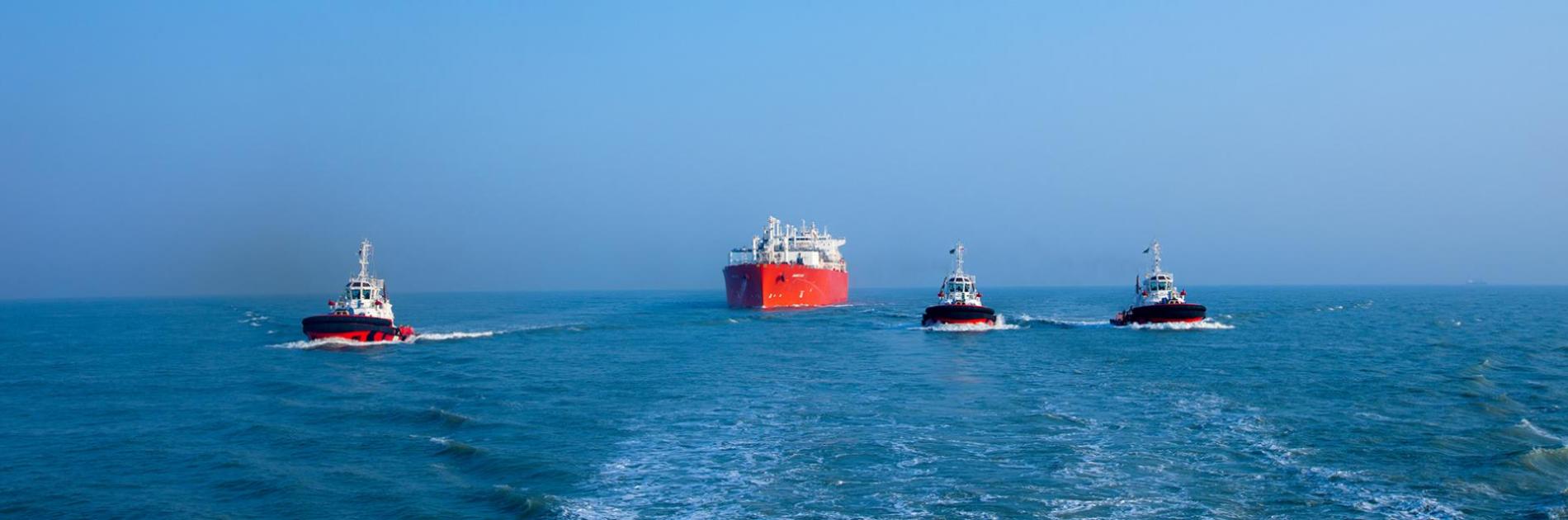
Energy security for Bangladesh rests on fuel that is both reliable and competitively priced. Our floating storage and regasification unit at Moheshkhali has been in commercial operation since April 2019 with a nameplate capacity of 500 mmcfd, and has delivered up to 550 mmcfd into the national gas grid. We intend to add further floating regasification capacity in Bangladesh and to build a diversified LNG supply portfolio that combines term volumes from more than one supply basin with opportunistic spot procurement. Diversity of source and of pricing basis reduces the country’s exposure to any single seller or any single index, and a lower delivered gas cost improves the economics of the existing combined cycle fleet immediately. We see this as the most direct route to reducing load shedding for households and industry.
We support the Government of Bangladesh’s raised ambition for renewable power. Under the Renewable Energy Policy 2025 the country targets 20% of its electricity from renewable sources by 2030 and 30% by 2040, and the Minister of Power, Energy and Mineral Resources reaffirmed both targets in Parliament in June 2026. The National Renewable Energy Development Strategy 2026-2030 sets out the delivery path, with 12,480 MW of installed renewable capacity by 2030, including 5,500 MW of rooftop solar and 4,500 MW of land based solar. Installed renewable capacity stood at about 1,800 MW in July 2026, including hydropower and off-grid solar, so the greater part of the programme is still to be built and it will need private capital at scale.
Summit is keen to participate in tenders for bankable solar projects in Bangladesh. Competitive tendering has already demonstrated its value, with average tariffs in the most recent utility scale round coming in at about 8.3 US cents per kWh, materially below the levels agreed under the earlier unsolicited process. Where projects are structured on bankable terms we will bid, bringing our record of financial close on international terms, our operating discipline, and our long standing relationships with development finance institutions and commercial lenders.
We strive to continuously improve the quality and safety of our plant operations, benchmarking ourselves against the best IPPs both regionally and globally, through the optimisation of the technical, commercial and financial aspects of our operations. We aspire to achieve high environmental, social and governance standards, benchmarking ourselves against national regulations and criteria established by multilateral institutions.
Bangladesh’s next phase of growth will be digital as well as industrial, and we intend to be part of it. Summit is developing the Summit AI Compute Hub, a programme to build artificial intelligence ready data centre capacity in Bangladesh together with the generation and fuel infrastructure that supports it. Our starting point is our own generation footprint, where land, cooling water, established grid connections and dispatchable power already sit together on one site. That combination is scarce in Bangladesh and it is what makes a credible data centre proposition possible. Capacity will be developed in phases and committed only against firm contracted offtake, so that nothing is built ahead of demand.
This is a natural extension of what Summit already does. Imported energy becomes electricity, electricity becomes computing capacity, and computing capacity supports digital services that Bangladesh can export. Combined with international fibre and subsea cable capacity, it allows the country to earn foreign exchange from digital exports and to keep its own data onshore under the national data governance framework. It also puts idle generation to productive use, which is the fastest way to convert existing capacity into economic value.
Beyond Bangladesh, we are selectively pursuing regional expansion, leveraging our experience in the power sector and the expertise of our partners to explore projects in neighbouring countries in South Asia and Southeast Asia, in particular Sri Lanka, Nepal and Bhutan. Beyond that list, we continue to identify countries at a similar development stage as Bangladesh as we strive to create value in these countries by applying the experience we have gained as the leading IPP in Bangladesh.
We look to participate selectively in government tenders or private sales in these countries, seeking to replicate a similar growth strategy to the one we have successfully executed in Bangladesh, focusing on asset classes where we have strong capabilities within Summit and through our wider ecosystem of partners such as JERA and Mitsubishi. We will be pursuing opportunities in gas infrastructure and gas based Combined Cycle Power Plants (CCPP), where we believe we can replicate the experience we acquired in developing the end-to-end gas value chain in Bangladesh.
We are also enthusiastic about developing renewable power, positioning ourselves for growth in the new energy economy in these markets, which are well endowed to enable such green electricity to be provided both locally and regionally. This includes developing hydropower resources in mountainous regions such as Bhutan and Nepal, and investing in utility scale solar and wind farms in markets where solar irradiance and wind resources are plentiful.
In Southeast Asia we are working to establish partnerships for the import of renewable electricity into Singapore. The Energy Market Authority of Singapore is targeting around 6 GW of low carbon electricity imports by 2035, close to a third of Singapore’s projected electricity demand, and has already granted conditional approvals or conditional licences to thirteen import projects. Summit Power International is headquartered in Singapore, and we intend to take part in this market by combining renewable generation and storage in the region with the cross border transmission arrangements and long term commercial structures required to deliver firm, dispatchable supply into the Singapore system.